
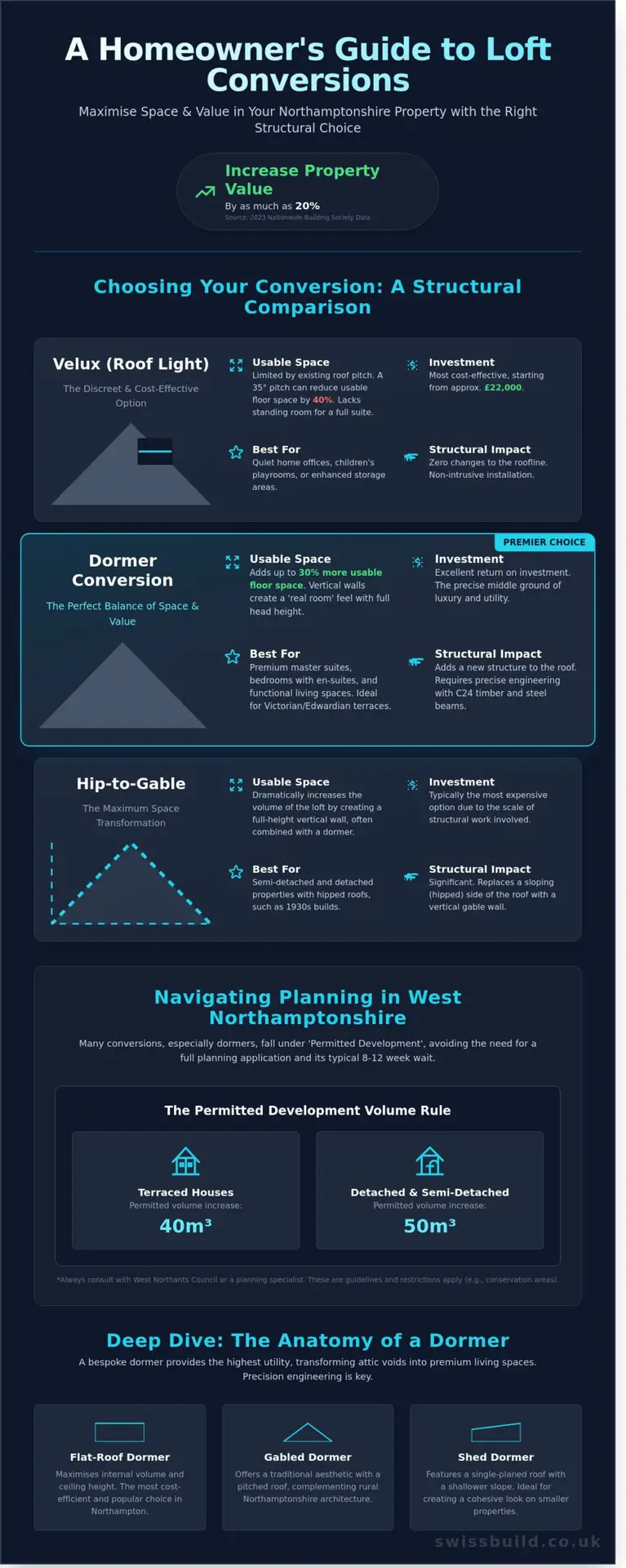
A standard attic space is often the most undervalued square footage in a Northampton home, yet it holds the potential to increase your property value by as much as 20% according to 2023 Nationwide Building Society data. You likely find your current loft a cramped, wasted opportunity, restricted by sloping ceilings and a frustrating lack of usable head height. We understand it’s often the complexity of West Northants Council planning rules and the fear of intrusive building work that stalls these essential home improvements.
Discover why a dormer loft conversion is the premier choice for Northamptonshire homeowners seeking to maximise space and property value with Swiss precision. This definitive guide provides a clear comparison of structural advantages, ensuring you achieve a seamless, high-end extension of your living environment. We will examine the technical superiority of the dormer design and explain our meticulous turnkey approach that manages every detail from initial architectural drawings to the final, uncompromising finish.
Key Takeaways
- Understand why a dormer loft conversion is the premier choice for Northampton’s Victorian and Edwardian terraces, offering an uncompromising blend of vertical space and architectural integrity.
- Evaluate the functional and financial differences between primary conversion types to identify the most sophisticated solution for your specific property layout and investment goals.
- Decipher the complexities of West Northamptonshire planning regulations, including the 40/50 cubic metre rule, to ensure your project proceeds with absolute legal certainty.
- Explore how a bespoke master en-suite transformation can significantly enhance your home’s market value, featuring insights from a successful project in Abington.
- Learn how meticulous Swiss construction methods and advanced insulation techniques guarantee a seamless, thermally efficient environment that remains comfortable across all seasons.
What is a Dormer Loft Conversion and Why Does it Suit Northampton Homes?
A dormer loft conversion is a structural extension that projects vertically from the plane of an existing sloping roof. This architectural intervention transforms a cramped, angled attic into a functional room with upright walls and standard window heights. In Northampton, homeowners prioritising space for Victorian and Edwardian terraced properties in districts like Abington or Far Cotton find this solution indispensable. These 19th-century builds often possess steep roof pitches but limited ground-floor footprints. By installing a dormer, we create a “real” room that feels consistent with the lower storeys. Swiss Build applies meticulous engineering to ensure these additions integrate seamlessly with the original roofline. Our disciplined approach ensures the new structure respects the heritage of the Northamptonshire landscape while providing modern utility.
The Anatomy of a Bespoke Dormer
The structural frame relies on a precise combination of timber and steel. We typically use high-grade C24 timber for the walls. Structural steel beams are essential for spans exceeding 4 metres to ensure total stability and an uncompromising finish. Externally, we select materials that match local ironstone, slate, or red brickwork to preserve the property’s heritage. A bespoke dormer loft conversion adds up to 30% more usable floor space compared to a standard roof-light conversion. This turns a storage void into a premium master suite with a turnkey finish.
Common Dormer Styles in the East Midlands
- Flat-roof dormers: This is the most frequent choice in Northampton for its cost-efficiency and maximum internal volume. It provides the highest ceiling heights across the entire floor area.
- Gabled dormers: These offer a more traditional aesthetic. They feature a pitched roof that complements the rural architecture found in Northamptonshire villages like Brixworth or Moulton.
- Shed dormers: These utilise a single-planed roof that slopes at a shallower angle than the main roof. They are often used for smaller bungalows to create a cohesive silhouette and balanced proportions.
Precision is the cornerstone of our process. Every dormer we construct in Northamptonshire undergoes a rigorous design phase to ensure the new vertical walls align perfectly with the existing load-bearing structures. This methodical planning alleviates the typical anxieties associated with major renovations. We deliver a seamless transition from the old to the new, ensuring the final result is both aesthetically stunning and technically perfect.
Dormer vs. Velux vs. Hip-to-Gable: A Comparison for Local Homeowners
Choosing a structural solution for your home requires a meticulous evaluation of your property’s existing architecture and your long-term lifestyle goals. In Northamptonshire, where Victorian terraces in Abington meet expansive detached builds in Collingtree, the choice isn’t merely about floor space. It’s about preserving the street’s aesthetic integrity while maximising market value. We categorise these choices based on three primary pillars: structural impact, investment level, and the volume of habitable space gained.
A dormer loft conversion represents the precise middle ground of luxury and utility. It provides the essential vertical head height required for a master suite while remaining within the Permitted development rights for householders for most Northampton residents. This avoids the 8 to 12-week wait typical of full planning applications, allowing for a more disciplined project timeline.
The Velux (Roof Light) Alternative
A Velux conversion is the most discreet option, typically starting at approximately £22,000 for a standard installation. It requires zero structural changes to the roofline; we simply install high-performance glazing into the existing pitch. While cost-effective, the 35-degree pitch of a standard roof often limits usable floor space by 40%. It’s a pragmatic solution for quiet home offices or storage, but it lacks the standing room required for a premium bedroom suite.
The Hip-to-Gable Transformation
For the 1930s semi-detached homes common in Duston or Wootton, the hip-to-gable is a transformative necessity. By extending the sloping “hip” side of the roof into a vertical “gable” wall, we create a seamless architectural transition. This modification adds roughly 15 to 20 cubic metres of internal volume. When we combine a hip-to-gable with a rear dormer loft conversion, the result is a substantial footprint large enough for a bespoke dressing room and en-suite. You can view our previous structural projects to see how these transitions harmonise with the original brickwork.
The Mansard: The Premium Choice
The Mansard is the pinnacle of loft design, featuring a 72-degree slope that effectively mimics a full additional storey. While these are rarer in Northampton due to a 25% higher cost compared to standard dormers, they offer uncompromising aesthetics. They often require a full planning application because they alter the roof structure so significantly. At Swiss Build, we specialise in delivering Mansard-level interior finishes within a Dormer framework, providing that sought-after architectural elegance without the unnecessary planning complexity.
Technical Precision: The Swiss Build Approach to Dormer Construction
A standard dormer loft conversion often suffers from a reputation as a mere utilitarian box attached to a roof. We reject this compromise. Swiss Build approaches every project as an architectural extension of the existing property, prioritising structural harmony over simple square footage. This commitment to integrity begins with the floor. While standard building regulations might permit basic timber sizing, we typically specify over-engineered 225mm joists at 400mm centres. This prevents the “bounce” often felt in inferior conversions; it ensures a silent, solid floor that feels like a permanent part of the home’s original footprint.
The transition between levels is equally vital. We don’t just fit a staircase; we design it to mirror the original spindle and handrail details of your Northampton home. This creates a seamless flow that avoids the awkward, cramped feel of a secondary addition. It’s a strategic investment. Research from Nationwide suggests that a well-executed conversion can add to the value of your home by up to 20%, provided the craftsmanship meets a high technical standard.
Uncompromising Insulation and Energy Efficiency
Northamptonshire’s winters demand technical excellence. We utilise high-performance PIR insulation boards to achieve U-values that exceed the current 0.18 W/m²K requirement. Soundproofing is treated with equal weight. We install 100mm acoustic mineral wool between floor joists to create a quiet sanctuary for a master suite. Every window is specified with A-rated glazing. This manages thermal gain during the summer months and retains heat when the temperature drops, ensuring the room remains habitable 365 days a year.
Project Management and the Turnkey Experience
Our turnkey promise removes the friction from construction. We manage everything from the initial CAD designs to the final coat of paint. You won’t face the “hidden extras” that plague approximately 15% of UK renovation projects. We provide fixed-price quotes that reflect the true cost of materials and expertise. Our construction phase is strictly managed within a 6 to 10 week window. This disciplined timeline is underpinned by daily site supervision and a dedicated project manager, ensuring your dormer loft conversion is delivered with Swiss-like punctuality.
Planning Permission and Regulations in West Northamptonshire
Executing a successful dormer loft conversion in Northampton requires more than architectural vision; it demands a disciplined approach to local governance. Most residential properties in West Northamptonshire benefit from Permitted Development (PD) rights, which allow for specific extensions without a full planning application. These rights are governed by strict volume limits: 40 cubic metres for terraced houses and 50 cubic metres for semi-detached or detached dwellings. If your design exceeds these parameters or involves a property in a restricted area, a formal application is mandatory. Understanding precisely do you need planning permission for a loft conversion in your specific circumstances is essential before any work begins.
Specific pockets of the town, such as the Abington Park Conservation Area or the historic quarters of St Giles, often have their PD rights restricted by Article 4 Directions. In these locations, West Northants Council requires a more sensitive architectural touch. Beyond planning, Building Regulations are a non-negotiable standard for every project. We focus on structural calculations to ensure the existing foundations can support the new floor, alongside rigorous fire safety measures including mains-linked smoke alarms and fire-rated doors.
Navigating West Northants Council Requirements
Swiss Build recommends securing a Certificate of Lawfulness for every project. This document provides definitive legal proof that your build was compliant at the time of construction, which is essential for any future property sale. The council expects external materials to harmonise with the existing street scene. This means matching brickwork or slate tiles with precision. For older Northamptonshire properties, we also manage ecological obligations, such as bat surveys required under the Wildlife and Countryside Act 1981, ensuring no protected species are disturbed during the build.
Party Wall Agreements with Neighbours
The Party Wall Act 1996 is a critical consideration for Northampton’s many Victorian and Edwardian terraces. If your dormer loft conversion involves structural work to a shared wall, you must serve a formal notice to your neighbours at least two months before work starts. We handle this delicate process with professional authority, facilitating independent structural surveys where necessary to protect all parties. This transparent communication strategy prevents delays and maintains the neighbourly goodwill that is vital for a smooth construction programme.
Secure your project’s success with our expert guidance. Book a professional feasibility study with Swiss Build today.
Maximising Value: Is a Dormer Conversion the Best Investment for You?
Investing in a dormer loft conversion represents one of the most astute financial decisions a Northampton homeowner can make. Beyond the immediate benefit of additional square footage, the integration of a master suite with a private ensuite bathroom aligns with the current demands of the regional premium property market. Data from the Nationwide Building Society suggests that a well-executed bedroom and bathroom addition can increase a property’s market value by up to 20%. This isn’t merely an extension; it’s a strategic asset appreciation.
Property Value Uplift in Northamptonshire
In the current Northampton market, where average house prices reached approximately £287,000 in late 2023, a high-quality conversion could realistically add over £55,000 to your home’s valuation. This financial gain often far outweighs the cumulative costs of stamp duty, estate agent fees, and legal disbursements associated with moving to a larger property in areas like Wootton or Collingtree. Understanding the loft conversion cost Northampton homeowners should anticipate is essential for making an informed investment decision.
A recent transformation of a Victorian mid-terrace property in Abington serves as a prime example. By installing a rear dormer loft conversion, the owners added a spacious master bedroom and a sleek shower room. This project resulted in a 17% valuation increase, confirmed by local surveyors in early 2024. We prioritise bespoke quality because budget builds often fail to provide the same ROI. Poorly integrated stairs or low-quality finishes are quickly identified during resale inspections, whereas our uncompromising standards ensure long-term value.
- Moving Up vs. Moving Out: Avoid the £12,000 to £15,000 average cost of relocation.
- Future-Proofing: Create multi-functional spaces that transition from a nursery to a sophisticated home office or gym as your needs evolve.
- Architectural Integrity: Our designs complement the existing character of Northampton’s diverse housing stock.
Your Journey to a Swiss-Standard Loft
The transition from an underutilised attic to a refined living space requires disciplined management and technical mastery. We begin with a meticulous site survey to assess your roof’s structural integrity and head height. Our architectural team then translates your vision into detailed plans. We ensure every millimetre of the new floor plan serves a purpose, whether that is a sanctuary-like master suite or a quiet professional studio.
We handle the complexities of building regulations and structural engineering so your experience remains seamless and stress-free. Every project we undertake is managed with the same rigorous discipline that defines our brand. You deserve a home that evolves with your lifestyle without the chaos of a disorganised building site. For comprehensive guidance on all loft conversions Northampton homeowners are considering, our expert team provides detailed consultation on every aspect of the transformation process.
Ready to elevate your home? Enquire about your bespoke Northampton loft conversion today and book your initial consultation with our expert team.
Securing the Future of Your Northampton Home
Investing in a dormer loft conversion represents a sophisticated move to enhance both the functional footprint and the long-term market value of your property. While Velux or Hip-to-Gable options have their place, the dormer remains the gold standard for creating generous, light-filled rooms that feel like a natural extension of your home. Navigating the specific planning requirements of West Northamptonshire requires a disciplined partner who understands the local landscape. Swiss Build provides this stability, drawing on over 26 years of industry experience to deliver results that are as technically sound as they are visually striking.
Our commitment to excellence is reflected in our fixed-price residential project fees and our comprehensive end-to-end project management. We handle every detail from the initial structural calculations to the final interior finishes, ensuring a seamless transition. You’ll benefit from a turnkey service that removes the typical anxieties of construction, replacing them with the calm assurance of Swiss precision. It’s time to transform your unused space into a testament to quality craftsmanship.
Book your bespoke loft conversion consultation in Northampton and start your journey toward a more spacious, refined home today.
Frequently Asked Questions
Do I need planning permission for a dormer loft conversion in Northampton?
Most dormer loft conversion projects in Northampton fall under Permitted Development rights, so you won’t usually need full planning permission. You must ensure the additional roof space doesn’t exceed 40 cubic metres for terraced houses or 50 cubic metres for detached properties. If your home sits within the All Saints or Derngate conservation areas, these rules change. We recommend securing a Lawful Development Certificate to provide 100% legal certainty for future property valuations. For a comprehensive breakdown of the local rules, our detailed guide on whether you need planning permission for a loft conversion in Northampton covers every scenario in full.
How much head height is required for a legal loft conversion?
You need a minimum finished head height of 2.2 metres across at least 50% of the floor area to comply with UK Building Regulations. This measurement is taken from the top of the existing ceiling joists to the underside of the ridge timber. If your current clearance is 2.1 metres or less, we’ll likely need to lower the ceilings on the floor below. This technical adjustment ensures the space is legally habitable and safe for daily use.
Can a dormer be added to a bungalow in Northamptonshire?
Yes, adding a dormer is a highly effective way to double the living space of a bungalow without extending its footprint. In Northamptonshire, these “roof-up” projects frequently create room for two additional bedrooms and a bespoke ensuite. We conduct a structural survey to ensure the original 1960s or 70s foundations can support the new vertical load. This approach provides a seamless transition from a single-storey dwelling to a substantial family home.
How long does a dormer loft conversion take from start to finish?
A standard dormer loft conversion typically takes between 8 and 12 weeks to complete from the initial structural breakthrough. The first 3 weeks focus on steel beam installation and external roof works; the following 5 weeks involve internal partitioning, insulation, and plumbing. The final 4 weeks are dedicated to high-end finishing and bespoke joinery. We build a 14-day buffer into our schedules to account for variable weather and ensure we meet our strict handover deadlines.
Will I need to move out of my house during the building work?
You won’t need to vacate your property during the construction process. We manage the build via external scaffolding, which means materials and tradespeople enter through the roof rather than your primary living spaces. This meticulously planned approach maintains your privacy for the first 6 weeks of the project. The only internal disruption occurs during the final 10 days when we install the new staircase. We schedule this phase with precision to minimise dust and noise.
How much does a dormer loft conversion cost in Northampton in 2026?
In 2026, a high-specification dormer loft conversion in Northampton starts at approximately £45,000 for a mid-terrace property. Larger detached homes requiring premium materials and luxury ensuite facilities typically range between £55,000 and £75,000. These figures reflect a 4% annual inflationary increase in material costs and skilled labour. Our turnkey service includes all architectural fees and structural calculations, providing a fixed-price contract that eliminates financial uncertainty from the outset of your project.
Is my roof suitable for a dormer conversion?
Your roof is suitable if it possesses a pitch of at least 30 degrees and a current internal height of 2.3 metres at the highest point. Most Victorian and 1930s homes in Northampton meet these criteria perfectly. If your property uses modern fink trusses, we’ll replace them with steel “A” frames to create the necessary void. A 15-minute physical inspection allows our surveyors to confirm the structural viability and provide a definitive assessment of your roof’s potential.
What is the difference between a dormer and a Mansard loft conversion?
A dormer features vertical walls and a flat roof, while a Mansard conversion uses a 72-degree sloping face to create a more integrated architectural aesthetic. Dormers are generally more cost-effective and faster to install, often completing 14 days sooner than a Mansard. Mansards typically require full planning permission because they alter the roof structure more significantly. We recommend dormers for clients seeking maximum internal volume and Mansards for those prioritising a traditional, sophisticated exterior profile.